Source eco friendly reusable glass milk bottle with lid for Juice, Milk, Coffee
Find 30 options for an eco friendly reusable glass milk bottle with lid suitable for juice, milk, and coffee. Buyers can compare capacities ranging from 150ml to 1000ml, lid types including screw-on and straw lids, and customization features like logo printing and packaging.
Key considerations
Products List




Comprehensive Sourcing Guide
Sourcing Guide for Eco-Friendly Reusable Glass Milk Bottles with Lids
The global shift toward sustainable packaging has elevated the demand for eco-friendly reusable glass milk bottles with lids. Glass remains a superior material for food and beverage containment due to its inert nature, which prevents chemical leaching and preserves product integrity. For procurement professionals, sourcing these items requires a nuanced understanding of technical specifications, supply chain logistics, and quality assurance protocols. This guide synthesizes available market data to provide a disciplined framework for evaluating suppliers and selecting products that align with environmental goals and operational needs.
Technical Specifications and Material Integrity
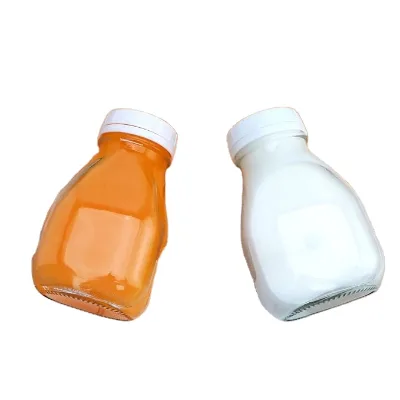
When evaluating glass milk bottles, the primary focus must be on material composition and structural design. The core material for these products is glass, specifically identified in market listings as BPA-free. This attribute is critical for buyers concerned with food safety, as it ensures the container does not release bisphenol A or similar compounds into milk, juice, or other beverages. The physical form of these bottles varies, with the most common configurations being round and square bottles. Round bottles, often associated with models like RCSA-201 and IDEA-201, are designed for efficient stacking and handling, while square options, such as the SLD-GB model, offer distinct aesthetic and shelf-space advantages.
Capacity is a significant variable in the sourcing process. Market data indicates a wide range of standard volumes, including 150ml, 250ml, 300ml, 350ml, 420ml, 500ml, 750ml, and 1000ml. Some listings also reference imperial measurements, such as 8-16 oz, which corresponds to the metric ranges found in the 240ml to 500ml category. Buyers must verify that the specific capacity aligns with their distribution requirements. The glass itself is typically transparent, allowing for visual inspection of the contents, though customization options for color and printing are widely available.
The lid mechanism is equally important for functionality. The observed market offers screw-on lids as the standard sealing type, ensuring a tight closure that prevents leakage. Specific models feature straw lids or metal screw caps, while others accommodate plastic caps or cork stoppers depending on the intended application. The sealing type is often described as "leak-proof," a claim that should be validated through physical testing during the sampling phase. Additionally, the bottles are generally uninsulated, meaning they are designed for ambient temperature storage or serving rather than thermal retention. This distinction is vital for buyers planning to use these bottles for hot beverages like coffee, as the lack of insulation may affect the temperature of the liquid over time.
Compliance, Certification, and Safety Standards
Navigating the regulatory landscape is a prerequisite for successful procurement of glass packaging. While specific certification statuses for individual suppliers may vary, the product attributes consistently highlight compliance with safety standards such as being BPA-free. This is a baseline requirement for any food-grade glass container intended for milk or juice. Buyers should also be aware of the Harmonized System (H.S.) Code associated with these products, which is typically 7010902000 for glass containers of a capacity not exceeding one liter. This code is essential for accurate customs classification and duty calculation.
Regarding broader environmental and safety certifications, the market data mentions REACH as a relevant background standard. REACH (Registration, Evaluation, Authorization, and Restriction of Chemicals) is a European Union regulation concerning the chemical substances and their safe use. While the provided data does not confirm that every listed product holds a specific REACH certification, it is a standard that buyers should actively verify with potential suppliers. The glass itself is noted as recyclable, reinforcing its eco-friendly profile. However, buyers must distinguish between the recyclability of the material and the specific certifications held by the manufacturing facility.
Surface handling and customization are also areas where compliance plays a role. Customized surface handling, including printing and logo application, must adhere to food safety regulations regarding ink safety and adhesion. The ability to accept customized logos is a standard feature, but the inks used must be non-toxic and suitable for food contact. Buyers should request documentation proving that the printing processes and materials used for customization meet the food safety standards of their target market, whether that is the EU, North America, or Asia.
Cost Drivers and Pricing Dynamics
Understanding the cost structure of glass milk bottles is essential for budgeting and negotiation. The observed price range in the market spans from $0.05 to $3.38 USD per unit. This significant variance is driven by several factors, including bottle capacity, glass thickness, lid complexity, and the extent of customization. Smaller bottles, such as the 150ml or 250ml variants, generally fall at the lower end of the price spectrum, while larger 750ml or 1000ml bottles with specialized lids command higher prices.
Minimum Order Quantity (MOQ) is another critical cost driver. The market data shows an MOQ range from 40 units to 30,000 units. Suppliers with lower MOQs, such as those requiring only 40 or 5000 pieces, may charge a premium per unit to cover setup costs for smaller production runs. Conversely, larger orders can leverage economies of scale to reduce the unit cost. Buyers should also consider the cost of packaging, which typically includes carton boxes and pallets. The choice between standard packaging and custom-branded packaging can influence the final landed cost.
Payment terms are another financial consideration. The standard payment method observed is Telegraphic Transfer (TT). Buyers should negotiate payment terms that align with their cash flow, such as a deposit followed by a balance upon shipment. Additionally, the availability of free samples is a common practice, allowing buyers to assess quality without incurring material costs, though shipping fees for samples may apply. Lead times, observed to be around 10 days for some suppliers, can impact inventory planning and overall project costs. Longer lead times may necessitate higher safety stock levels, increasing holding costs.
Typical Applications and Usage Scenarios
The versatility of glass milk bottles makes them suitable for a broad spectrum of applications. The primary use case is for beverages, including milk, juice, coffee, tea, and water. The "Beverage" category is the most frequent application listed, covering everything from dairy products to alcoholic spirits like wine, vodka, whiskey, and liquor. This wide applicability stems from the inert nature of glass, which does not react with acidic or alcoholic contents, preserving the flavor and quality of the liquid.
For the dairy and juice industry, the leak-proof and screw-cap design ensures that products remain fresh during transport and storage. The wide opening feature found in some models facilitates easy filling and cleaning, which is particularly beneficial for businesses that handle bulk liquids. In the coffee and tea sector, these bottles serve as reusable containers for takeaway beverages, aligning with sustainability initiatives to reduce single-use plastic waste. The ability to customize the bottle shape and color allows brands to differentiate their products in a crowded market.
Beyond beverages, the bottles are also used for food storage. The dishwasher-safe attribute makes them convenient for home and commercial use, as they can be easily cleaned and sanitized between uses. This feature is particularly valuable for businesses offering refillable beverage programs or subscription services. The packaging, typically involving carton boxes and pallets, ensures that the bottles are protected during shipping, making them suitable for both domestic and international distribution.
Supplier Evaluation and Procurement Strategy
Selecting the right supplier requires a rigorous evaluation process that goes beyond price comparisons. Buyers should prioritize suppliers who offer OEM (Original Equipment Manufacturer) services, as this indicates the ability to customize the product to specific brand requirements. The availability of customization options, including size, shape, color, printing, and packaging, is a key indicator of a supplier's flexibility. Buyers should verify the supplier's capacity to handle their required order volume, noting that some suppliers may have an MOQ of 30,000 units, while others are more flexible with smaller orders.
The origin of the products is another factor to consider. The market data indicates that these glass bottles are primarily manufactured in China. Buyers should assess the logistical implications of sourcing from this region, including shipping costs, lead times, and potential tariffs. The lead time of approximately 10 days suggests a relatively quick turnaround, but this can vary based on order complexity and supplier workload. Buyers should also evaluate the supplier's quality control processes, ensuring that they have robust systems in place to maintain consistency across large production runs.
Communication and responsiveness are critical in the procurement process. Suppliers who offer free samples and are willing to provide detailed product specifications demonstrate a commitment to customer service. Buyers should request samples of different models, such as the RCSA-201, IDEA-201, and SLD-GB, to compare quality, lid fit, and overall finish. It is also advisable to check the supplier's track record for meeting deadlines and handling customization requests.
Quality Control and Long-Term Procurement Considerations
Ensuring the long-term viability of the supply chain requires a focus on quality control and durability. The glass bottles must be resistant to breakage during handling and shipping. The "leak-proof" claim should be verified through rigorous testing, especially for bottles intended for liquid transport. Buyers should inspect the sealing mechanism of the screw caps to ensure they provide a tight seal that prevents leakage under various conditions.
The recyclability of the glass is a key selling point for eco-friendly initiatives. However, buyers should also consider the environmental impact of the packaging materials, such as the carton boxes and pallets used for shipping. Opting for suppliers who use sustainable packaging materials can further enhance the eco-friendly profile of the product. Additionally, the customization options, including printing and logo application, should be durable and resistant to fading or peeling over time.
Long-term procurement considerations also include the scalability of the supplier. As a business grows, the demand for glass milk bottles may increase. Buyers should ensure that their supplier has the capacity to scale production without compromising quality or lead times. Establishing a long-term partnership with a reliable supplier can lead to better pricing, priority production slots, and improved communication. Finally, buyers should stay informed about changes in regulations and standards that may affect the production and sale of glass packaging, ensuring that their supply chain remains compliant and competitive.
Summary of Key Product Attributes
To assist buyers in their decision-making process, the following table summarizes the key attributes observed in the market for eco-friendly reusable glass milk bottles with lids.
| Attribute | Observed Values / Options |
|---|---|
| Material | Glass (BPA Free, Recyclable) |
| Shape | Round, Square |
| Capacity | 150ml, 250ml, 300ml, 350ml, 420ml, 500ml, 750ml, 1000ml (8-16 oz) |
| Lid Type | Screw-on Lid, Straw Lid, Metal Screw Cap, Plastic Cap, Cork |
| Sealing Type | Screw Cap (Leak Proof) |
| Insulation | Uninsulated |
| Customization | Size, Shape, Color, Printing, Package, Logo |
| Surface Handling | Customized |
| Color | Transparent (Customizable) |
| Applications | Juice, Milk, Coffee, Beverage, Wine, Vodka, Whiskey, Food |
| Packing | Carton Box, Pallet |
| Origin | China |
| H.S. Code | 7010902000 |
| Payment | TT |
| Sample | Free (Shipping may apply) |
| Lead Time | Approx. 10 Days (Variable) |
| MOQ | 40 - 30,000 Units |
By carefully analyzing these attributes and adhering to the procurement strategies outlined above, buyers can successfully source high-quality, eco-friendly glass milk bottles that meet their specific operational and sustainability goals.
FAQs
What customization options are available for glass milk bottles?
Suppliers offer customization for size, shape, color, printing, and packaging. Buyers can request specific dimensions like 240ml or 500ml and choose between round or square bottle shapes to match brand requirements.
Can I get free samples before placing a large order?
Yes, free samples are available for most models to verify quality. However, buyers should confirm if shipping costs for the sample are covered, as this varies by supplier and specific model requested.
What is the typical lead time for manufacturing these bottles?
The lead time is approximately 10 days for standard orders. This duration may vary depending on the complexity of customization, the total order quantity, and the specific production schedule of the factory.
Which lid types are compatible with these glass bottles?
Compatible lids include screw-on caps, straw lids, metal screw caps, plastic caps, and cork stoppers. The sealing type is generally designed to be leak-proof for secure transport of beverages.
What are the standard capacity sizes offered for these bottles?
Standard capacities range from 150ml up to 1000ml, including 240ml, 350ml, 500ml, and 750ml options. Some listings also reference imperial measurements such as 8 to 16 ounces for specific models.
Are these glass bottles safe for food and beverage contact?
Yes, the bottles are BPA-free and made of transparent glass suitable for food contact. They are designed for use with milk, juice, coffee, and other beverages without leaching harmful chemicals.